
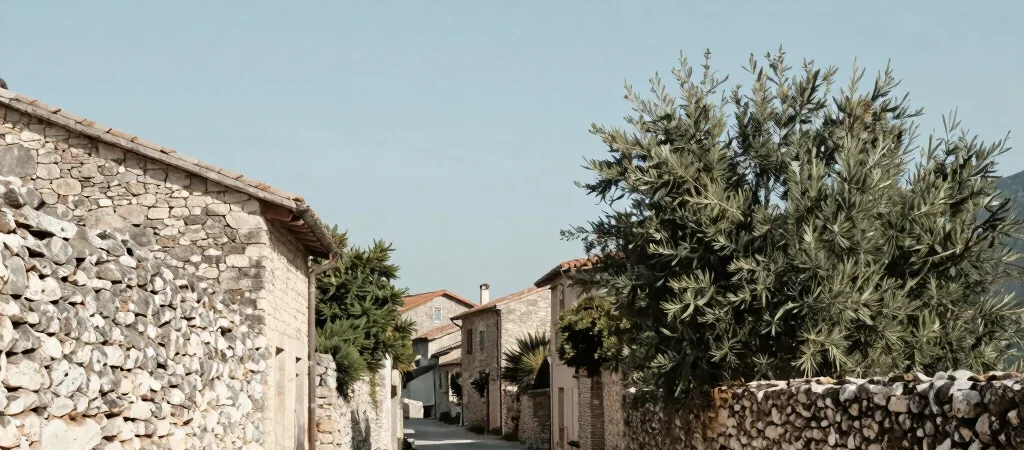
In Bézaudun-les-Alpes, the shape of the village is part of its story. Rather than treating the old lanes as a quick passage between viewpoints, take time to notice how the buildings and paths sit together, and where the surviving vestiges of the ramparts enter the scene.
Follow the village fabric
An old lane rewards a slower look: changes in paving, the way a wall meets a doorway, or a bend that keeps one part of the village out of view. These details are useful clues to how people have moved through and adapted the built environment, even when they do not tell a complete story on their own.
Notice the difference between a broad view and a close one. From farther back, the village reads as a group of roofs and stone surfaces; within the lanes, thresholds and changes in scale make that outline feel lived-in rather than simply picturesque.
Look for traces, not spectacle
The remains of the ramparts are a reason to pay attention, not a promise of an intact fortification or a dramatic ruin. Approach them as fragments within the village’s wider fabric, and avoid assuming that every old-looking wall has the same age or purpose.
Bézaudun is best read with curiosity and restraint: look, compare, and leave room for what cannot be established from a walk alone. If you want to attach dates or historical claims to what you see, check a reliable heritage source rather than relying on appearance.